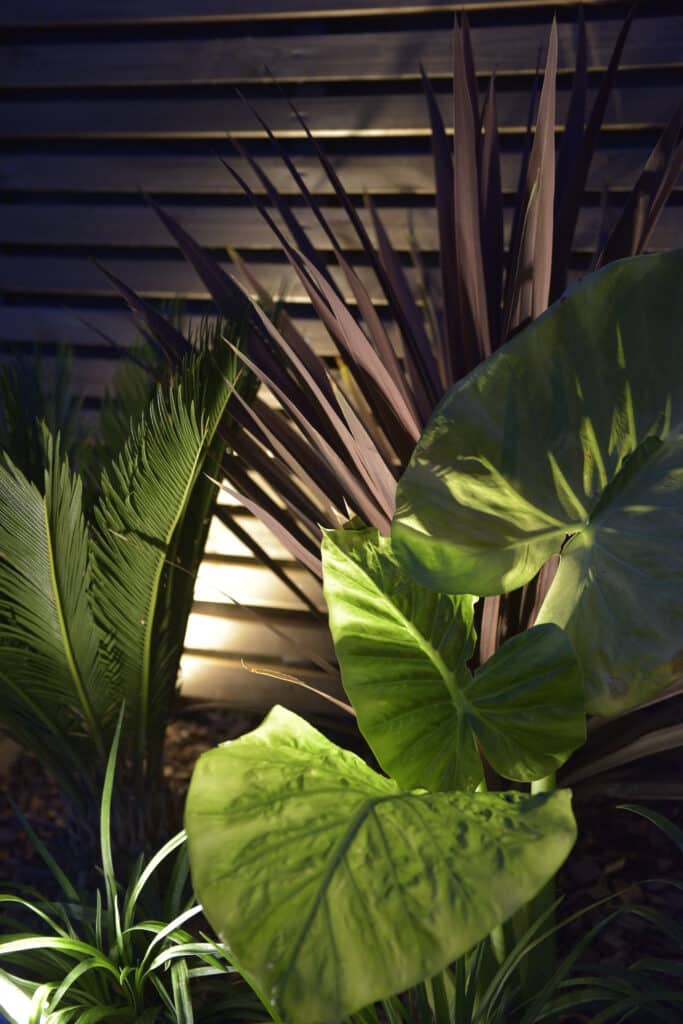
What if your garden became an art gallery at dusk? Thoughtful lighting shapes the atmosphere, reveals volume, and highlights textures. When it incorporates illuminated artworks by artists, the garden takes on a subtle yet distinctive artistic dimension, in perfect harmony with current trends in luxury landscape design. Lighting becomes a compositional element in its own right, serving the identity of the space. But how can one strike the right balance between art, light, and landscape?
Why incorporate illuminated artworks into your garden?
Adding illuminated artworks to your garden creates a magical and poetic atmosphere while adding a touch of character.
For a magical ambience
As soon as the sun sets, the garden transforms. A well-placed light artwork transcends the ordinary and creates a captivating atmosphere. It guides the eye, draws unexpected perspectives, and turns a simple flower bed into a living painting. Shadows dance across foliage, reflections play on the water’s surface, and plant silhouettes take on an air of mystery.
Light extends the life of the garden after dark. It structures spaces, ensures safe movement, and enhances key areas. Illuminated artworks become visual markers that offer a new interpretation of the nighttime landscape.
To personalize your outdoor space
A garden reflects the people who live in it. Incorporating illuminated artworks by artists allows for the expression of a strong identity, particular tastes, and a unique sensibility. Unlike standardized functional lighting, luminous art tells a personal story.
This singularity transforms the garden into a true living space, where every element has been chosen with intention. Light art engages in dialogue with the architecture of the house and contributes to the overall staging of the garden. In the garden of a contemporary villa, where each landscape line extends the architecture, it thus creates a distinctive and recognizable visual signature.
To poetically blend art and nature
The synergy between art and nature, revealed through light, offers a new realm of expression. Sculptures lit from within, lights integrated into branches, subtle illumination of plant textures—each piece complements the landscape without overpowering it. This approach respects the garden’s balance and, once night falls, offers a more nuanced and refined reading of nature.
What forms can these illuminated works take?
The possibilities are endless, limited only by imagination and the technical constraints of the site:
- Backlit sculptures: Made from translucent resin, blown glass, or perforated metal, these pieces emit a soft glow that creates enchanting atmospheres and may feature programmable LEDs.
- Artistic light fixtures: Designed by artists or designers, these are objects of contemplation even when switched off, often with organic shapes inspired by nature.
- Subtle projections and shadow play: Architectural projectors can cast patterns on walls, highlight sculpted foliage, or create large-scale shadow play.
- Custom creations: Collaborating with local artisans or artists allows for the design of a unique piece, perfectly tailored to the garden and reflective of its spirit.
Once you’ve chosen your pieces, it’s time to integrate them into your garden to create a truly unique ambiance.
How to seamlessly integrate them into landscape design?
Several criteria must be considered: placement, subtlety, and the nature of the light.
Choosing the right locations
Placement determines the impact of an illuminated artwork. Along a path, it guides footsteps and ensures nighttime safety while creating a journey-like experience. On a terrace, it becomes a focal point for summer evenings, naturally drawing eyes and conversations.
A remarkable tree deserves lighting that reveals its majesty. A water feature offers fascinating possibilities: light reflects, multiplies, and creates mirror effects that double the presence of the artwork. Each garden area has its own potential, which should be explored thoughtfully.
Focus on subtlety: integrate without overloading
It’s tempting to multiply light sources, but restraint is often more elegant. Too much lighting can kill the atmosphere and turn the garden into an amusement park. Illuminated art works best in touches, accents, and suggestions. It creates zones of light and shadow that structure the space while preserving its mystery.
This minimalist approach also respects nocturnal wildlife. Insects, essential to biodiversity, are disturbed by excessive lighting. By using light sparingly, one maintains ecological balance while crafting more refined and contemplative moods.
Think of light as a living material
Light is not static. It changes with time, seasons, and weather conditions. An illuminated artwork should be conceived within this dynamic. How does it react to rain or moonlight?
This living dimension is what distinguishes ordinary lighting from a true landscape art piece. It requires observation, experimentation, and adjustment. A good lighting project evolves over time, gradually revealing all its possibilities.
Our tips for a successful project
Starting small is a wise approach—one or two well-placed pieces are better than a multitude of mediocre elements. This gradual strategy allows you to observe the effects, refine your choices, and add other coherent artworks over time.
It’s best to choose durable materials suitable for outdoor use. Illuminated art must withstand weather, temperature changes, and humidity. Corten steel develops a noble patina, aluminum resists corrosion, and tempered glass can handle impacts.
Working with a top landscape designer simplifies the project. This professional understands the key stages of successful landscaping and knows how to harmoniously integrate illuminated art into the overall composition. They anticipate technical challenges, advise on placement, and coordinate different stakeholders.
Technical fundamentals should always be a priority:
Power supply: Plan for dedicated circuits, buried according to current standards.
Safety: Adhere to protection ratings (IP) appropriate for outdoor use, and use certified equipment.
Maintenance: Ensure accessibility for cleaning and replacing light sources.
These practical aspects determine the project’s longevity and the enjoyment of the space. For more bright ideas, check out our article: What are the best lighting solutions to enhance your garden at night?
Integrating illuminated artworks into your garden transforms the outdoor space into a nocturnal theater where the beauty of nature engages in a dialogue with art. With subtlety and expertise, light becomes the guiding thread of an exceptional garden. Want to transform your garden with illuminated art? Contact the Adonis Paysages team to help you design a custom project.