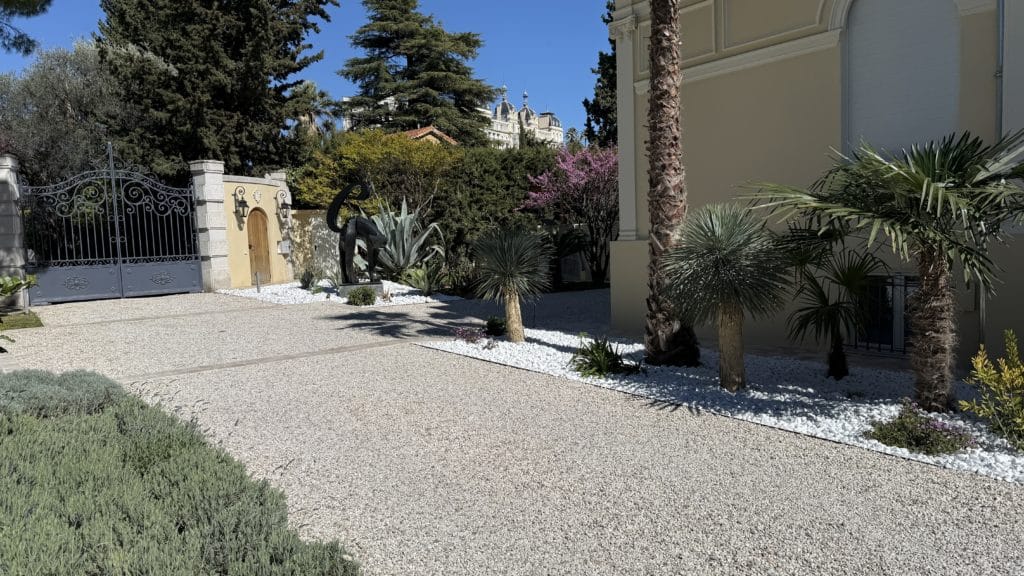
A garden can complement architecture, but it can also become a work of art in its own right. A dry garden does not endure the Mediterranean climate—it enhances it. However, in the Mediterranean, nature is neither docile nor forgiving: it imposes its rules with rigor. Controlled mineral elements, structuring vegetation, and absolute resource efficiency all contribute to creating a landscape that is both timeless and alive. All that remains is to orchestrate this delicate balance between aesthetic rigor and exemplary sustainability. How can this be achieved without compromising excellence?
The high-end dry garden: a new vision of landscape luxury
A luxury garden inspired by the Riviera is measured by the subtlety and relevance of its landscaping choices. The dry garden embodies this rare equation: creating strong visual impact with minimal water resources.
It favors an elegant restraint where volumes, textures, and negative space structure the whole. Yet this aesthetic relies on a very concrete reading of the land. In a Mediterranean climate, the landscape designer must contend with:
- poor, rocky, or calcareous soils;
- drying winds, sometimes salty and strong;
- significant thermal reflection from mineral surfaces;
- rapid water stress in summer;
- sloping terrain or unpredictable microclimates that alter plant behavior.
In this context, luxury must achieve a lasting balance between natural constraints and aesthetic demands.
Key principles of a prestige dry garden
To design a prestige dry garden, every choice—from soil to plants—must be made with precision and refinement.
Soils and materials: the elegance of foundations
The choice of soil and materials is crucial to the balance of a dry garden. On site, conditions are rarely ideal: compact soils, excess active limestone, or conversely extreme drainage can compromise root development.
A common mistake is planting in poor soil without proper preparation. As a result, even resilient shrubs may decline due to a substrate incompatible with their needs. In high-end projects, this diagnostic and soil amendment phase determines long-term success. It can even happen that a supposedly robust species must be relocated after the first season, when the soil’s true behavior reveals an imbalance.
Adapting the garden to exposure
Exposure is one of the major constraints. Scorching sun, prevailing winds, and mineral reflection create extreme conditions. For example, plantings installed directly in the path of wind, without protection, may dry out within weeks despite proper watering. It is not the plant that is unsuitable—it is its placement, which fails to respect the site’s microclimate. A well-designed alignment on a plan can become a point of weakness if it ignores airflow or the intensity of summer radiation.
Choosing the plant palette
Vegetation must be both aesthetic and drought-adapted. It is best to favor:
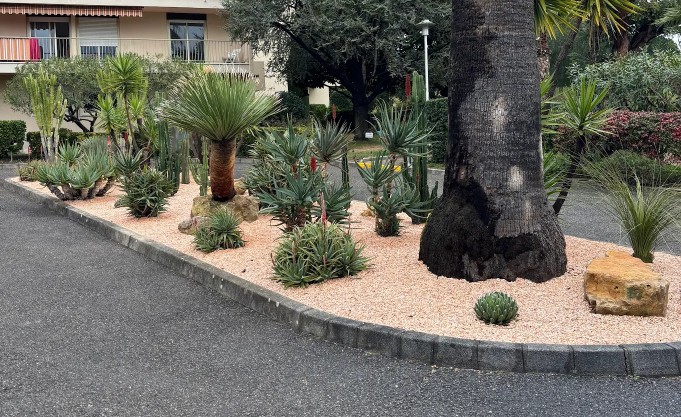
- Mediterranean perennials for long-lasting textures and colors
- Graphic or structuring shrubs to create volume and focal points
- Succulent and aromatic plants to limit maintenance and add fragrant nuances
This thoughtful selection allows for the creation of a living and elegant garden while controlling water needs. Variations in height, shape, and color create dynamic visual sequences, making every corner of the garden engaging while maintaining overall coherence.
The art of composition
Volumes and negative spaces are essential to give rhythm and breathing room to the garden. They also play an ecological role by limiting water competition, promoting air circulation, and reducing thermal stress. Trees, pergolas, and shaded areas provide comfort and airflow. The subtle staging of empty space enhances each plant and material.
Complementary elements such as understated fountains, discreet lighting, or elegant pathways reinforce the overall harmony without overwhelming the space. The art of composition lies in balancing plant presence with open space, offering visitors a refined and fluid sensory experience at every step.
Mistakes to avoid
In highly aesthetic projects, certain recurring mistakes appear:
- plant alignments overly exposed to the south;
- excessively large mineral surfaces that amplify heat;
- sensitive species placed in areas of strong reflection.
These choices, appealing on paper, can become costly—requiring plant replacement, excessive maintenance, or leading to a loss of harmony within the first seasons. In a successful dry garden, composition consists of orchestrating constraints rather than concealing them.
Which plants and species for a high-end dry garden?
The selection of plants and species defines the character and longevity of a prestige dry garden, combining beauty, resilience, and controlled maintenance.
Perennials and long-lasting blooms
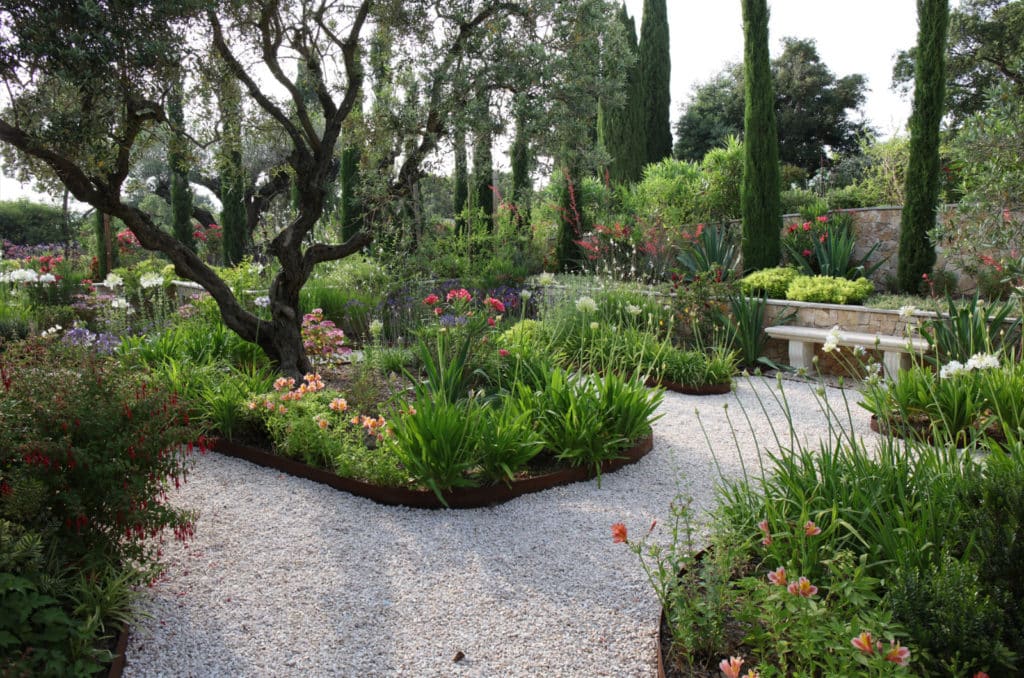
Mediterranean perennials are key to combining beauty with restraint. Lavender, rosemary, sage, and agapanthus provide varied textures and long flowering periods, punctuating the garden with colorful and fragrant touches. These choices offer a refined graphic effect while requiring little maintenance, contributing to an elegant and drought-resistant garden.
Shrubs and suitable trees
Shrubs and trees selected for their drought resistance add structure and volume to the garden. Olive trees, kermes oaks, pistachio trees, and junipers provide sculptural silhouettes, create focal points, and offer lasting greenery throughout the year. These species allow for the play of perspectives and structure the garden in a harmonious and high-end manner.
Succulent and aromatic plants
To complete the plant palette, succulents and aromatic plants add texture, fragrance, and contrast. They allow the use of spaces where other plants would fail while limiting maintenance needs.
Cacti, agaves, sedums, or aromatics such as thyme and oregano require minimal care and reinforce the Mediterranean identity of the garden. These graphic and fragrant touches create areas of character and help compose an elegant and vibrant dry garden, even in the most drought-exposed zones.
Why entrust a prestige dry garden project to a specialized landscape designer?
To transform a dry garden into an elegant, sustainable, and well-controlled space, the expertise of a specialized landscape designer is essential.
Technical and aesthetic expertise
A specialized landscape designer knows how to select soils, materials, and plants suited to the climate, terrain, and architectural style of the home. They analyze soil, winds, exposure, and water constraints to avoid mistakes that may be invisible at first but costly in the long term. They master volume composition, perspective structuring, and the harmony between mineral and plant elements. They know how to balance aesthetic ambition with the site’s ecological realities, ensuring the design remains viable over time.
Durability and controlled maintenance
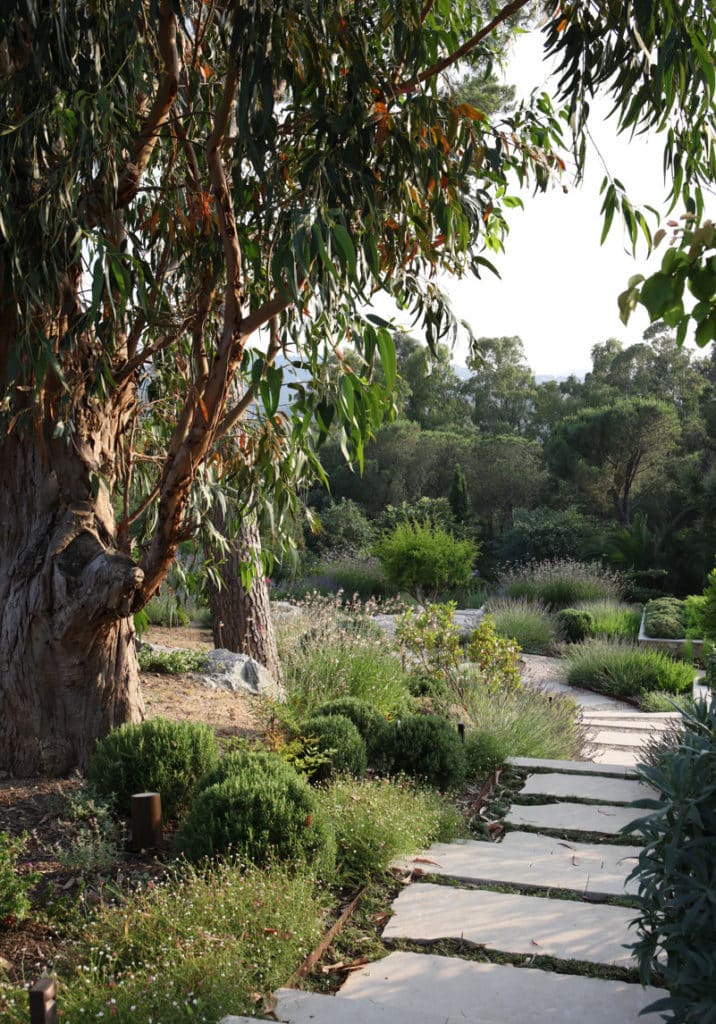
Beyond aesthetics, a prestige dry garden must remain elegant and easy to maintain. The landscape designer plans efficient irrigation, selects long-lasting plants, and carefully considers exposure, shade, and airflow. The result is a high-end Mediterranean garden where beauty and sustainability coexist, offering a refined, comfortable, and water-efficient outdoor space.
To extend the elegance and durability of your dry garden, explore our advice on protection against wind and sea spray.
Behind its apparent simplicity, the dry garden conceals meticulous work of analysis, adaptation, and anticipation. Through thoughtful choices of soil, plants, and volumes, it transforms outdoor space into a refined and sustainable Mediterranean setting. Would you like to create your own high-end dry garden? Contact us for a bespoke landscape design.