
A retaining wall is rarely judged on the day it is completed. It is judged five years later, when the soil is saturated with water. That is when the difference becomes clear between a properly engineered structure and a simple pile of rocks. On the French Riviera, where planning regulations have become increasingly stringent, choosing the right retaining system is now as much a matter for the local planning authority as it is for the construction site. Gabions, cyclopean stone retaining walls, and landscaping rock retaining walls are three very different solutions, both technically and from a regulatory standpoint. Here is what each one actually offers—and what current regulations still allow.
Three retaining systems with very different characteristics
Although all three systems share the same objective—retaining soil and stabilizing sloping ground—their design, structural behaviour, and landscape integration differ significantly.
1. Cyclopean stone retaining walls
Cyclopean stone retaining walls are built from carefully selected natural boulders precisely interlocked to create a massive retaining structure. The stability of the wall relies entirely on the weight and arrangement of the stones, without mortar or any additional structural framework. The natural voids between the rocks allow water to infiltrate and drain away, reducing hydrostatic pressure behind the wall. Their raw, natural appearance makes them particularly suitable for steep terrain and locations where a rugged, natural finish is desired.
2. Gabions
A gabion retaining wall consists of steel wire cages filled with stone. Its stability comes from the combined weight of the stone fill and the rigidity of the steel mesh, giving it a regular shape and a standardized construction process, unlike cyclopean stonework. Like cyclopean walls, gabions offer excellent drainage thanks to the spaces between the stones. This predictability makes them particularly well suited to projects requiring consistent results and controlled installation, especially on sites with demanding technical constraints.
3. Landscaping rock retaining walls
Landscaping rock retaining walls also use natural boulders, but they are assembled according to a different philosophy. The stones are carefully selected, oriented, and positioned to follow the natural contours of the land rather than forming a regular wall. As with cyclopean construction, stability relies on the weight and interlocking of the rocks, while their natural porosity promotes effective drainage. This approach can also incorporate planting pockets between the stones, making it particularly suitable for projects where landscape integration and enhancing the site are just as important as soil retention.
Why have regulations changed in some French Riviera municipalities?
Several municipalities have gradually strengthened their requirements in order to better regulate retaining structures while preserving both public safety and the landscape.
A unique geographical and landscape context
The French Riviera is characterized by numerous sloping, sometimes very steep, sites where runoff, erosion, and soil pressure can become significant, particularly during Mediterranean storm events. In this environment, retaining structures play a vital role in stabilizing the ground and controlling water flow.
Local authorities must also preserve the visual quality of their landscapes. Highly visible retaining walls can dramatically alter the appearance of hillsides, natural areas, and residential neighbourhoods. This dual requirement for safety and landscape integration largely explains the gradual tightening of regulations.
Stricter rules for certain structures
To better regulate developments on sloping land, several municipalities have strengthened the requirements set out in their Local Urban Development Plans (PLUs). Depending on the area, regulations may govern the height of retaining structures, the materials used, their location, or the drainage systems that must be incorporated.
Cyclopean stone retaining walls are the primary focus of these restrictions. This is not a matter of aesthetics. A massive retaining wall built too high raises genuine stability concerns, and those concerns are what municipalities seek to regulate first. Along several coastal municipalities, we are now seeing planning applications for cyclopean retaining walls being refused, while existing structures remain tolerated. The applicable rules vary from one property to another and cannot simply be assumed.
Landscape considerations also play a role. A cyclopean wall is visually imposing and highly noticeable on a hillside. In heritage-sensitive areas, the Architects of France’s Historic Buildings (Architectes des Bâtiments de France – ABF) assess how well the structure integrates into its surroundings. Nevertheless, safety remains the original reason behind these regulations—and the main reason they are unlikely to become more flexible.
What does this mean for property owners?
Before undertaking retaining works, it is now essential to verify the planning rules applicable to your property. Depending on the nature and location of the project, prior notification or planning permission may be required.
Reviewing the local PLU makes it possible to identify any restrictions concerning permitted construction techniques, wall dimensions, or landscape integration requirements. Carrying out this review in advance helps avoid planning refusals, project redesign during the approval process, and additional costs associated with compliance.
Gabions: the solution more readily accepted by France’s Heritage Authorities
Where cyclopean stone retaining walls increasingly come up against planning restrictions, gabions are generally accepted. Steel mesh cages filled with small rocks are widely tolerated—and often appreciated—by the Architects of France’s Historic Buildings, while the gaps between the stones naturally provide effective drainage. This largely explains their widespread use across the French Riviera, far more than their aesthetic qualities.
Their main strength lies in their predictability. The cages are standardized, installation methods are well established, and the final result depends far less on individual craftsmanship than cyclopean stonework. On projects where execution quality may be uncertain, this provides genuine reassurance.
That same predictability is also their limitation. A gabion creates a regular, geometric form; it cuts across the landscape rather than following its natural contours. Its metallic appearance contrasts sharply with natural stone and often requires additional planting to blend into its surroundings. We recommend gabions when the site conditions, regulations, or project constraints make them the appropriate choice—and we also say so when they are not.
A gabion is an excellent engineering solution. It is not, however, a landscape solution. When the objective is to reveal the site’s natural topography rather than simply contain it, a different approach is required.
Landscaping rock retaining walls: more a craft than a technique
Landscaping rock retaining is not simply about arranging stones to hold back soil. It is a process of adapting to the land itself.
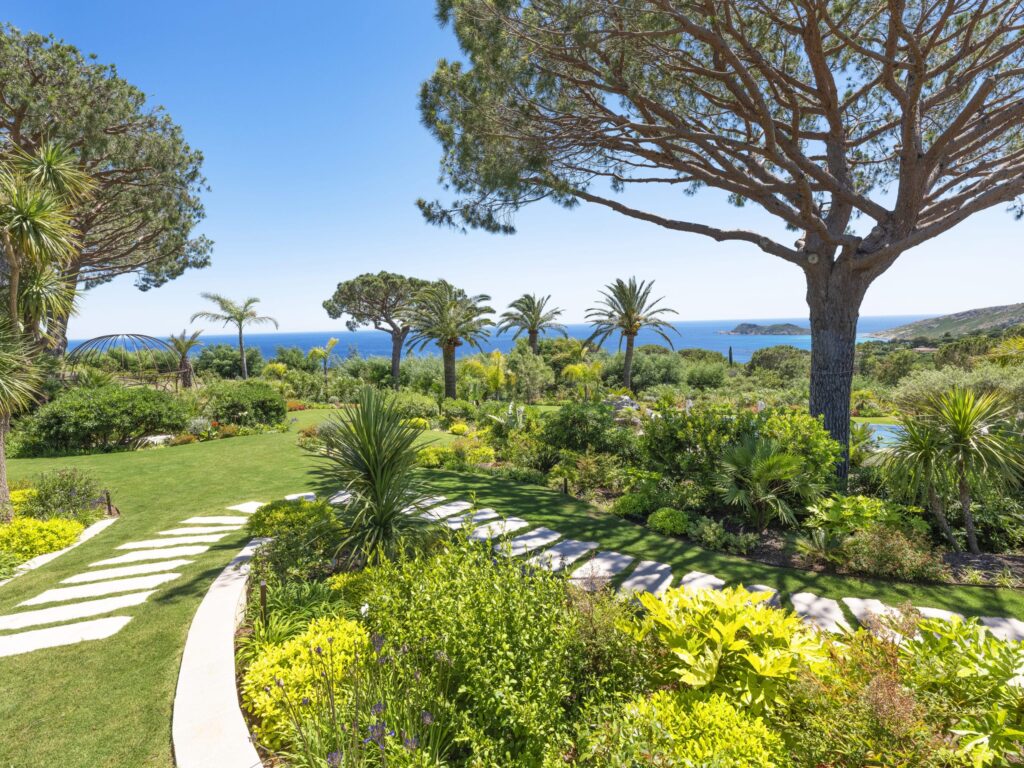
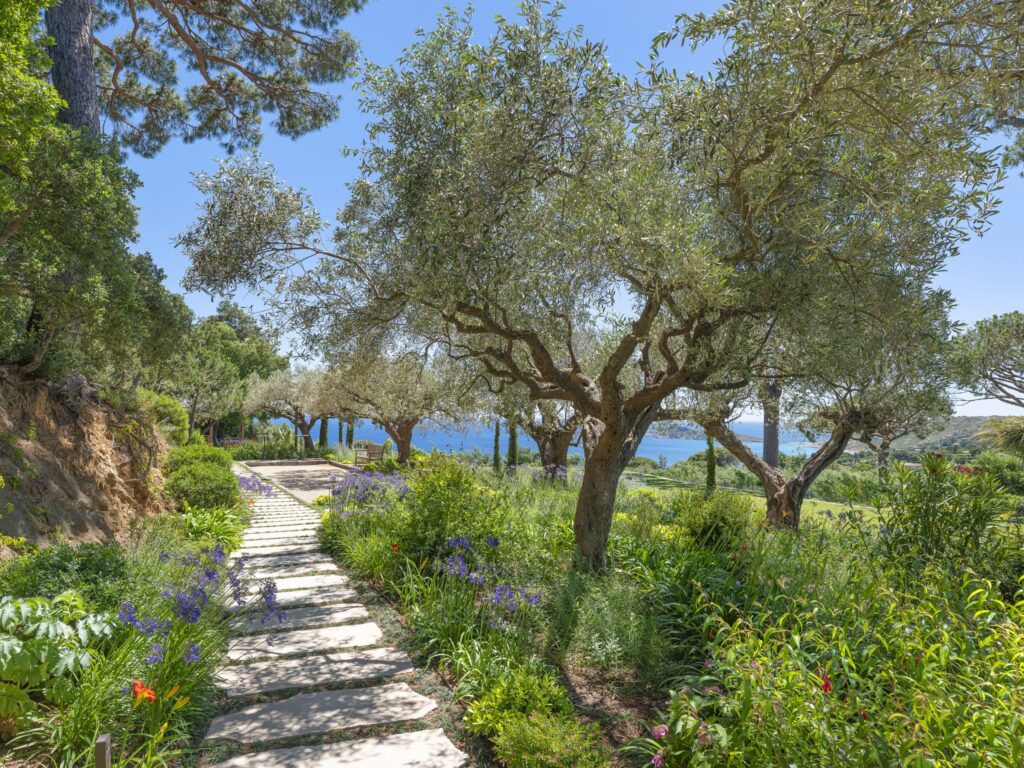
In Opio, a brush-covered slope had been written off by the owner as unusable land—too steep, inaccessible, and without any practical purpose. We transformed it into a complete outdoor living space featuring a pétanque court, an elevated timber terrace integrated among the existing oak trees, and carefully designed planting with an exotic touch. What made this possible was not the technique alone, but taking the time to understand the site before deciding how to stabilize it.
That is the difference between placing stones and designing a structure.
A skill that cannot be improvised
Landscaping rock retaining relies on a rare and highly specialized expertise. Every site must be carefully observed and understood so that each boulder can be selected, oriented, and positioned appropriately, taking into account both structural requirements and landscape integration.
“For me, landscaping rock retaining is a genuine craft, and very few companies truly know how to do it. You need someone operating the excavator and another person guiding them, giving each stone its proper orientation.”
Dominique Cariolo
Unlike more standardized construction methods, this approach leaves considerable room for interpreting the site and drawing on practical experience. The long-term stability of the structure depends on the selection of the stones, their anchoring, orientation, and precise positioning.
This expertise cannot be learned in a classroom. It is passed from one craftsman to another, on site. The older generation passed it on to us, and we are trying to pass it on to the next generation within our own teams. It is a slow process that cannot simply be decreed, and there is no guarantee it will be enough to prevent this craft from disappearing.
How can you recognize a high-quality landscaping rock retaining wall?
A genuine landscaping rock retaining wall is far more than a simple arrangement of stones. It relies on a solid structural foundation and an overall design approach that integrates the structure naturally into its surroundings. The boulders are positioned to follow the site’s natural contours, while planting pockets may be incorporated to encourage vegetation.
The most common defect is easy to identify once you know what to look for. Stones are simply placed against one another, soil is tipped over the top, and the result is presented as landscaping rock retaining. We regularly encounter this across the French Riviera. It may hold together for a few seasons before collapsing during the first heavy rainfall, leaving the owner with an unstable slope that must be rebuilt.
The real question is therefore not whether the structure looks attractive on the day it is completed. It is what actually keeps the stones in place once the ground becomes saturated with water. A genuine landscaping rock retaining wall relies on a structural foundation and carefully interlocked stones. A decorative pile of rocks relies on nothing but itself.
How to choose the right solution for your property
Before comparing retaining systems, it is important to assess the site’s constraints, local planning regulations, and the objectives of the project.
Step 1: Check local planning requirements
Before comparing the technical, aesthetic, or financial advantages of each solution, the first consideration should always be local planning regulations. Some municipalities impose restrictions on the types of retaining structures that may be built, their dimensions, or how they must integrate into the landscape. Your first step should therefore be to review the planning rules applicable to your property.
Step 2: Define your objective
Not every retaining solution serves the same purpose. Some projects are intended simply to stabilize a slope, while others aim to enhance a garden or create a genuine outdoor living space. The right technique depends as much on its intended function as on the desired visual result.
Step 3: Choose the right contractor
The quality of workmanship remains crucial. Before committing to a contractor, it is advisable to review their references, comparable projects, and genuine expertise with the chosen construction method. A retaining structure affects the long-term stability of the land and leaves very little room for error.
Looking for a contractor? Discover how to choose the best landscape contractor on the French Riviera.
Choosing between gabions, cyclopean stone retaining walls, and landscaping rock retaining walls is no longer simply a matter of cost. Local planning regulations have become a decisive factor. Once these constraints have been identified, the final choice depends on the desired appearance and the contractor’s level of expertise. Planning a project? Request a site assessment or a feasibility study tailored to your property.