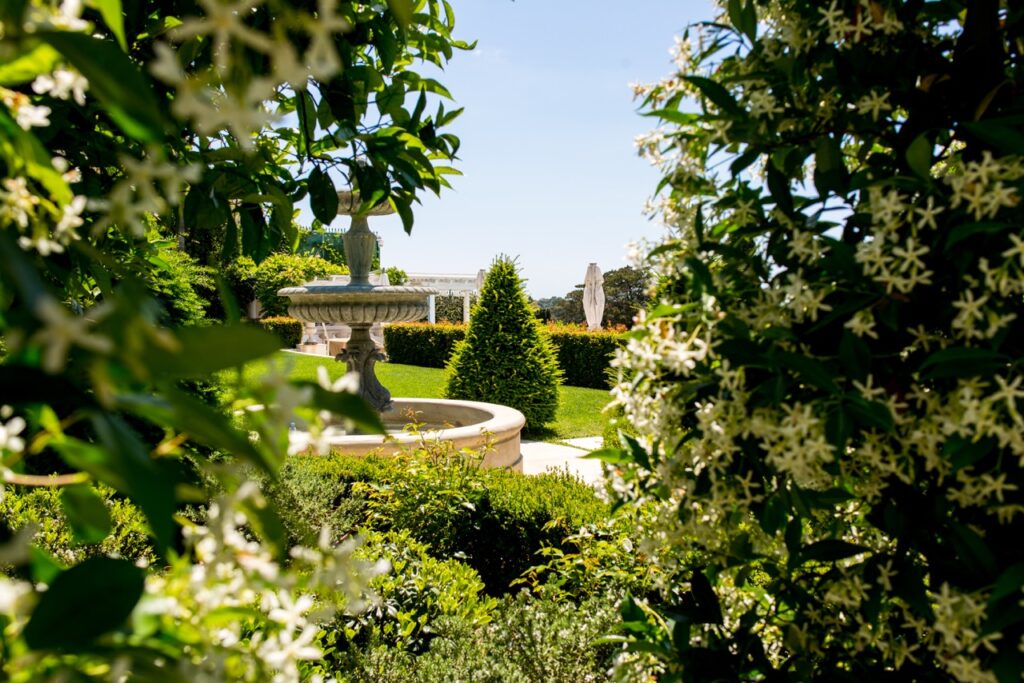
A garden fountain brings a fresh new look to your outdoor area. Beyond its decorative role, it shapes the landscape, creates a serene atmosphere, and enhances your property’s value. Whether you’re considering a discreet wall-mounted fountain or a majestic central installation, the setup requires careful planning: strategic placement, style selection, technical connections, appropriate materials, and project cost. Every decision impacts the final result and contributes to the overall harmony of your outdoor space, especially when ensuring perfect coherence between garden design and the home’s architecture.
So, how can you successfully install a fountain that will enhance your garden for years to come?
Why install a garden fountain?
A fountain redefines the soul of a garden. It adds an architectural dimension that structures the space, creating a natural focal point around which the garden is organized. The soothing sound of water, carried by its stream, offers a bubble of serenity, masking everyday noise. Beyond these sensory benefits, a fountain offers multiple advantages:
- Increased property value: It raises your property’s value and reflects a refined lifestyle.
- Microclimate regulation: Natural water evaporation cools the air during hot summer days.
- Biodiversity attraction: Birds and pollinating insects are drawn to the water source, enriching your garden’s ecosystem.
- Light effects: The play of light on water creates a changing ambiance throughout the day, further enhanced at night by proper lighting.
A fountain thus goes beyond simple decoration to become a living feature that enlivens and enriches your outdoor space every day.
The importance of choosing the right location
The placement of a fountain determines both its visual impact and longevity. Choosing the right spot is essential.
Positioned along a walkway or visible from living spaces, the fountain becomes a living painting. Its perspective from various viewpoints should be considered to fully reveal its beauty, especially from the living room or terrace. It can also rest on a pedestal or slab to ensure stability and enhance its presence.
Sun, wind, and shade all play key roles in a successful installation. Too much sun promotes evaporation and algae growth, while too much shade limits light effects. A semi-shaded spot is ideal, preserving water clarity while highlighting its reflections. A sheltered location ensures a consistent water display.
Lastly, access to utilities must be anticipated: water supply, drainage, electrical connections, or hydraulic links. These technical connections should remain discreet yet accessible for maintenance, ensuring an elegant and functional installation.
What type of fountain to choose?
The fountain’s design should align with the style of your home. Today, there are many models suited to various aesthetics.
Wall fountains
Mounted against a wall or façade, they save ground space while creating a vertical water feature. Ideal for urban gardens or intimate courtyards, they can feature classic designs with mascarons and stone-effect basins or showcase clean, modern aesthetics. Some come in kits for easier installation, with integrated PVC tubing and circuits.
Central fountains
True centerpieces of the garden, they command attention with their majestic presence. Placed at the center of an open space, often surrounded by a basin, they draw the eye. Water shoots upward before cascading down, creating a perpetual, hypnotic movement.
Contemporary and designer fountains
Perfect for modern architecture, they feature clean lines and innovative materials: corten steel, polished concrete, metal, or geometrically carved stone. Water flows in smooth sheets down flat surfaces, producing a calming visual effect.
Classic and sculptural fountains
Inspired by French or Italian formal gardens, they celebrate the art of sculpture. Mythological figures, tiered basins, stone columns… Water flows from one level to the next, adding timeless elegance to the space. Some also include wooden elements for a natural, rustic feel.
Key steps to install a garden fountain
From design to water activation, installing your chosen model follows a process that ensures both beauty and functionality.
Preliminary study and landscape integration
This phase considers the terrain’s specifics—whether flat or sloped—to ensure the fountain integrates naturally into its surroundings. It defines the type of fountain, its scale, and positioning.
Ground preparation and connections
Precise excavation is needed: digging, placing a waterproof liner, and leveling. Trenches for electrical conduits, water supply pipes, and drainage are dug to required depths.
Technical Installation
Two main systems are possible:
- Closed circuit with submersible pump (efficient and autonomous, water circulates in a loop);
- Direct water supply from the main system, for fountains requiring constant flow.
High-quality connections are essential for long-term durability. The pump must match the required flow rate. Precision is key in pump placement, pipe connections, flow regulation, and installing the drain valve.
Finishing touches and testing
The fountain’s surroundings are carefully landscaped: natural stone paving, decorative gravel, or perennial plants. Tests ensure watertightness and proper flow. Plant integration perfects the look: grasses, ferns, or lavender form a natural setting. All these elements contribute to a sustainable garden without sacrificing luxury.
Maintenance and durability: keeping your fountain beautiful and functional
A fountain requires regular upkeep to maintain its beauty across seasons. Frequent basin cleaning removes lime deposits and algae, while periodic pump checks ensure optimal performance. In frost-prone regions, winterizing the installation—draining, disassembling, and protecting sensitive components—ensures durability.
Planning for durability from the outset is a smart investment:
- Choose a low-energy pump.
- Opt for a closed circuit to limit water consumption.
- Use weather-resistant materials.
- Ensure easy technical access for maintenance.
Hiring a landscape designer: the choice for excellence
Entrusting your project to a landscape designer means more than just a technical installation—it’s about creating a fully integrated landscape feature.
A landscape designer will create a fountain that perfectly matches your space and desires. From the first sketch to final realization, they manage every detail to produce a unique installation. Beyond the fountain itself, they envision its integration into the entire garden: visual flow, volume balance, and harmony with existing vegetation. From initial consultation to post-installation follow-up, they guide you with expertise, ensuring a result that meets your expectations. With their help, you’ll design a harmonious, durable, and personalized outdoor space where the fountain becomes a central landscape element.
To further explore the art of integrating sculptures and installations into green spaces, feel free to check out our dedicated article.
Installing a garden fountain goes beyond simple landscaping—it’s a lasting enhancement to your outdoor aesthetics. From design to maintenance, every step deserves attention and expertise. Contact us to design your garden fountain and create an outdoor space that lives up to your vision.