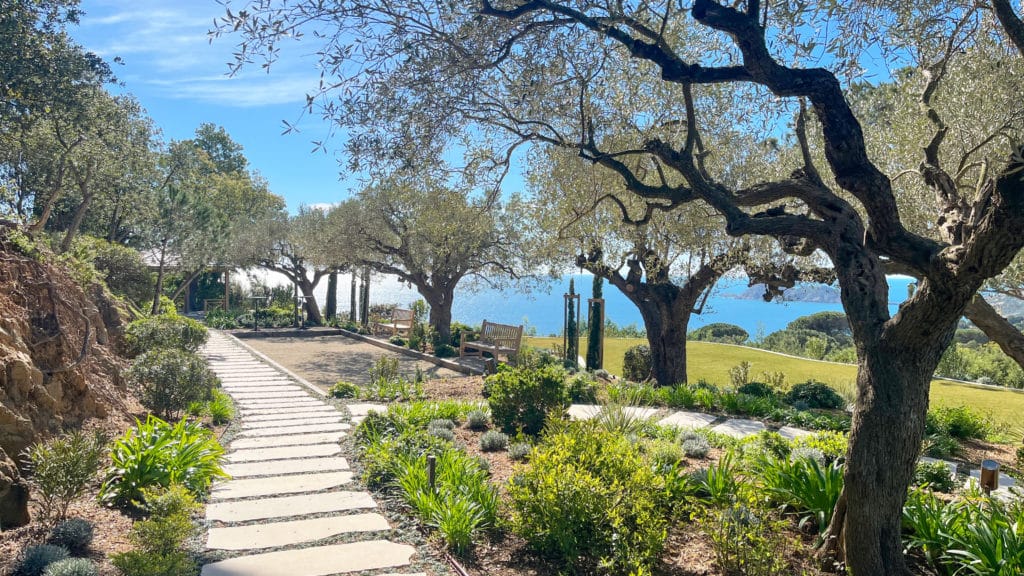
Some outdoor spaces favor simplicity, others open up to an aromatic garden, and some choose to impose a true landscape signature. In Mediterranean landscapes, where aridity shapes lines and reveals textures, the choice of trees becomes an architectural act. Carefully selected rare species offer a subtle alchemy of character, adaptability, and refinement. How can you transform an outdoor space into a truly exceptional garden using these singular trees?
Why choose rare species to enhance a Mediterranean garden?
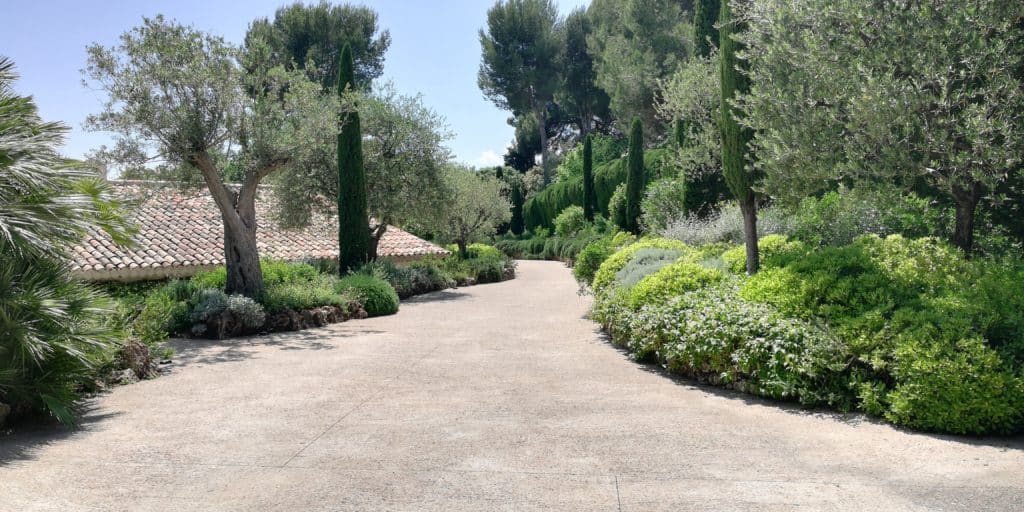
In an environment where olive trees and cypresses dominate, rarity becomes a genuine aesthetic statement.
Creating a unique landscape signature
A Mediterranean garden can become predictable if it relies solely on classic species. Introducing a rare tree breaks this uniformity and infuses a strong identity into the entire project. Rarity reflects intention—the intention to assert a style and offer a distinctive visual experience.
Enhancing architecture and increasing property value
In high-end landscape design, plants are not added to architecture—they interact with it. A columnar tree can emphasize the verticality of a contemporary façade; a weeping silhouette can soften the mineral lines of a modern-inspired villa.
Beyond immediate aesthetics, these choices enhance the property’s long-term value. A garden structured around rare and sustainable species becomes an extension of the home.
Introducing a sculptural and emotional dimension
Some rare trees have an almost sculptural presence. Their shape, bark, or foliage color creates a focal point that captures attention from the moment you enter the garden.
In a Mediterranean climate, where light is intense and contrasts are pronounced, these silhouettes become staging elements. They structure perspectives, create plays of shadow, and contribute to a complete sensory experience.
Criteria for selecting a rare tree suited to the Mediterranean climate
In a Mediterranean climate, each tree must meet specific requirements. To ensure the longevity and elegance of the project, several criteria should guide selection:
- Strong drought resistance: the tree must withstand prolonged dry periods, thanks to a deep root system or physiology adapted to poor, well-drained soils.
- Tolerance to sea spray and prevailing winds: for coastal properties where salt and gusts can weaken more delicate foliage.
- Moderate water requirements: consistent with responsible resource management and current environmental challenges. An exceptional garden must be sustainable.
- Year-round aesthetic appeal: evergreen foliage, graphic bark, a striking winter silhouette, or spectacular flowering.
- Controlled growth: to avoid heavy pruning and preserve volume balance over time.
- Compatibility with local soil: often calcareous and well-drained, ensuring healthy and lasting establishment.
Uniqueness only has value when it is part of a coherent and sustainable landscape strategy.
Selection of rare tree species for an exceptional Mediterranean garden
Some rare and resilient species integrate so seamlessly that they do not merely decorate the garden—they enhance it.
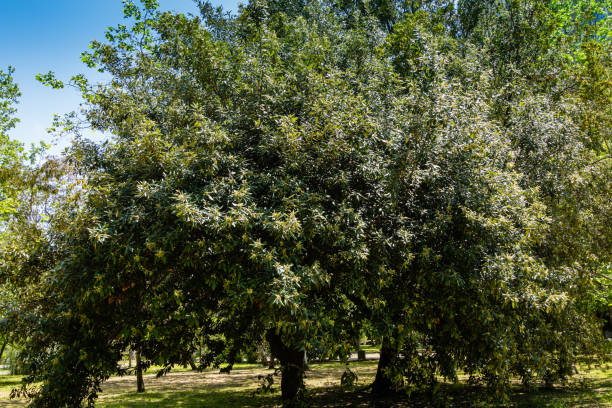
Fastigiate Holm Oak (Quercus ilex ‘Fastigiata’)
Derived from the Mediterranean holm oak, the fastigiate holm oak combines robustness with a slender habit. Its columnar silhouette structures perspectives elegantly, while its deep green evergreen foliage resists drought and coastal winds. Suited to well-drained, calcareous soils, it requires thoughtful placement. In rows or as architectural punctuation, it offers a rarer and more sophisticated alternative to the cypress.
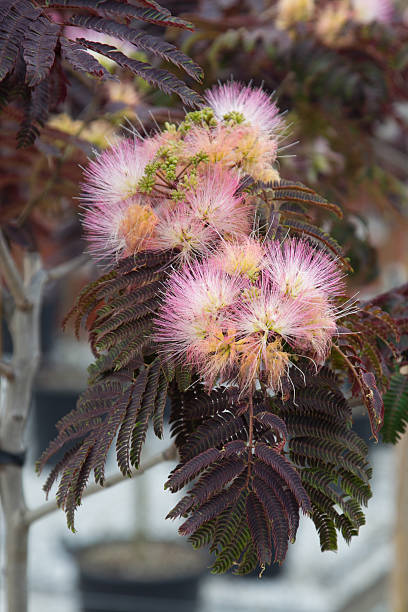
The Purple Silk Tree (Albizia julibrissin ‘Summer Chocolate’)
Native to Asia, the purple silk tree captivates with its rich chocolate-colored foliage, enhanced by Mediterranean light. In summer, its soft pink, airy flowers create a refined contrast with mineral materials. It provides filtered shade, ideal for a terrace. Heat-resistant, it nonetheless requires a sheltered position protected from wind and severe frost.
Weeping Japanese Pagoda Tree (Styphnolobium japonicum ‘Pendula’)
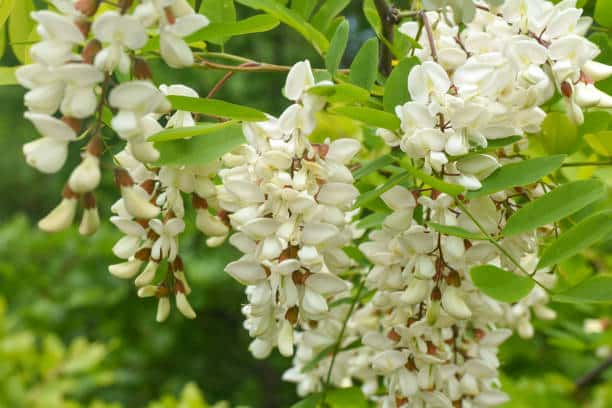
Native to China and Korea, the weeping Japanese pagoda tree charms with its cascading, almost sculptural silhouette. Graphic in winter and lighter in summer with its creamy white blossoms, it brings both softness and structure. Its slow growth allows for precise volume control. Planted in a patio or near a terrace, it creates an intimate and elegant shaded space.
Palo Verde (Parkinsonia aculeata)
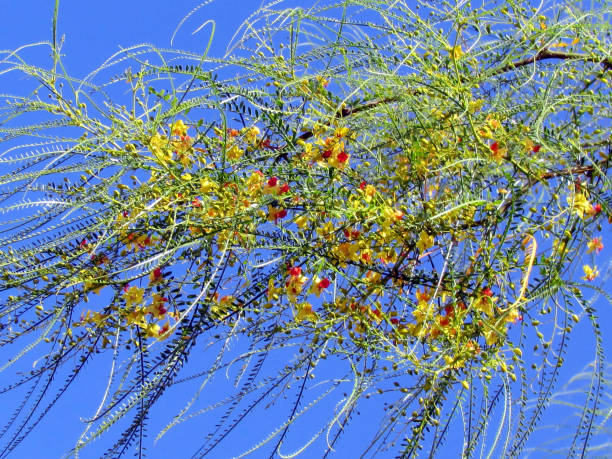
A treasure from South America and the southern United States, the palo verde draws attention with its striking green bark and bright yellow flowers. Its delicate silhouette adds a touch of desert chic that pairs beautifully with contemporary architecture. Highly resistant to drought and poor soils, it remains sensitive to prolonged cold and requires an appropriate varietal choice. Integrated into a mineral garden, it asserts an elegant modernity.
How to integrate these rare species into a high-end landscape project?
Each species must find its place according to its form, growth, and specific needs, so the garden maintains balance and sophistication over time. A few key principles ensure successful integration:
- Think in terms of overall composition: each tree becomes a structuring element. Columnar and weeping forms are positioned to create rhythm and perspective, while standalone specimens become focal points.
- Combine materials and plants: natural stone, architectural concrete, or fine wood pair with foliage and blooms to create refined contrast.
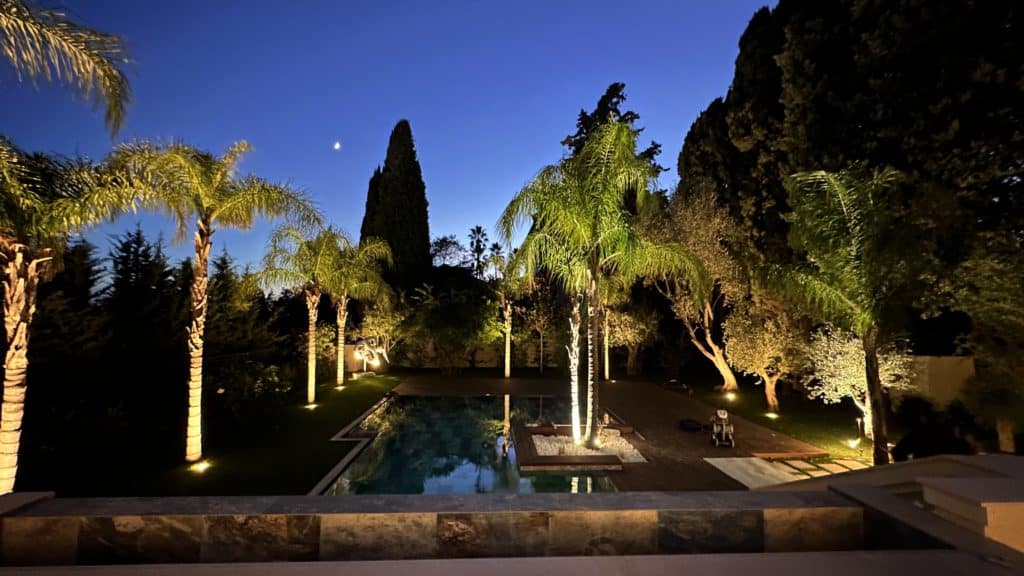
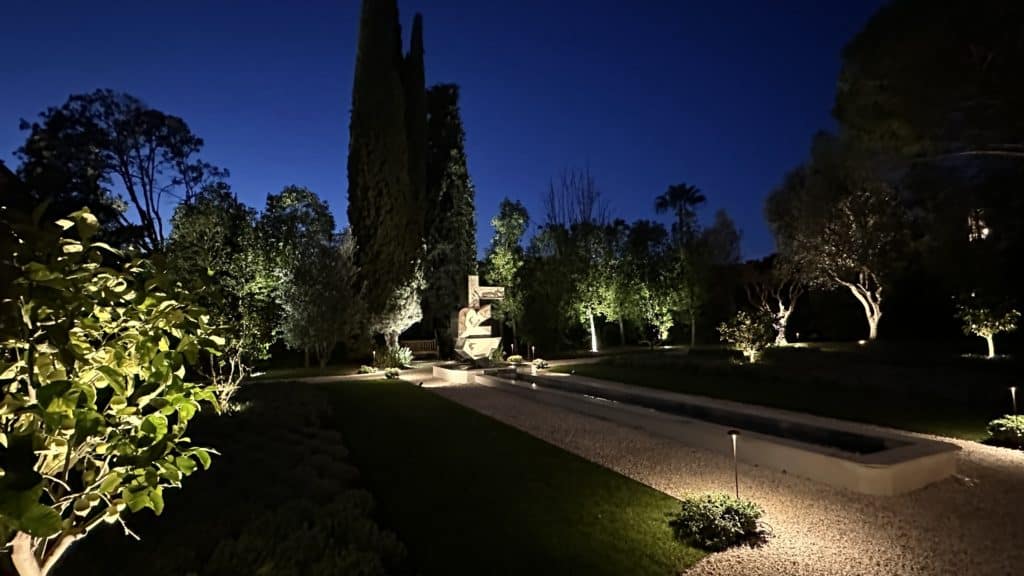
- Master landscape lighting: subtle lighting highlights trunks and silhouettes, transforming the garden into a living, poetic space at nightfall.
- Anticipate the garden’s evolution: projecting 10 to 20 years ahead ensures coherence and proportion, respecting the slow or rapid growth of each species.
- Rely on specialized expertise: an experienced landscape designer will adapt species selection to the microclimate, soil, and intended uses of the garden, ensuring a lasting and elegant result.
By following these principles, the garden becomes a true experiential space, where each rare tree highlights the property’s character and enriches the Mediterranean landscape.
To further explore the harmony between plants and architecture, we invite you to discover our article dedicated to the coherence between garden design and the architecture of the house.
An exceptional Mediterranean garden combines rarity, elegance, and adaptability. Carefully chosen species bring structure, color, and character while respecting the climate and spatial volumes. Would you like to transform your outdoor space into a unique and refined garden? Contact us to design a landscape project that meets your ambitions.