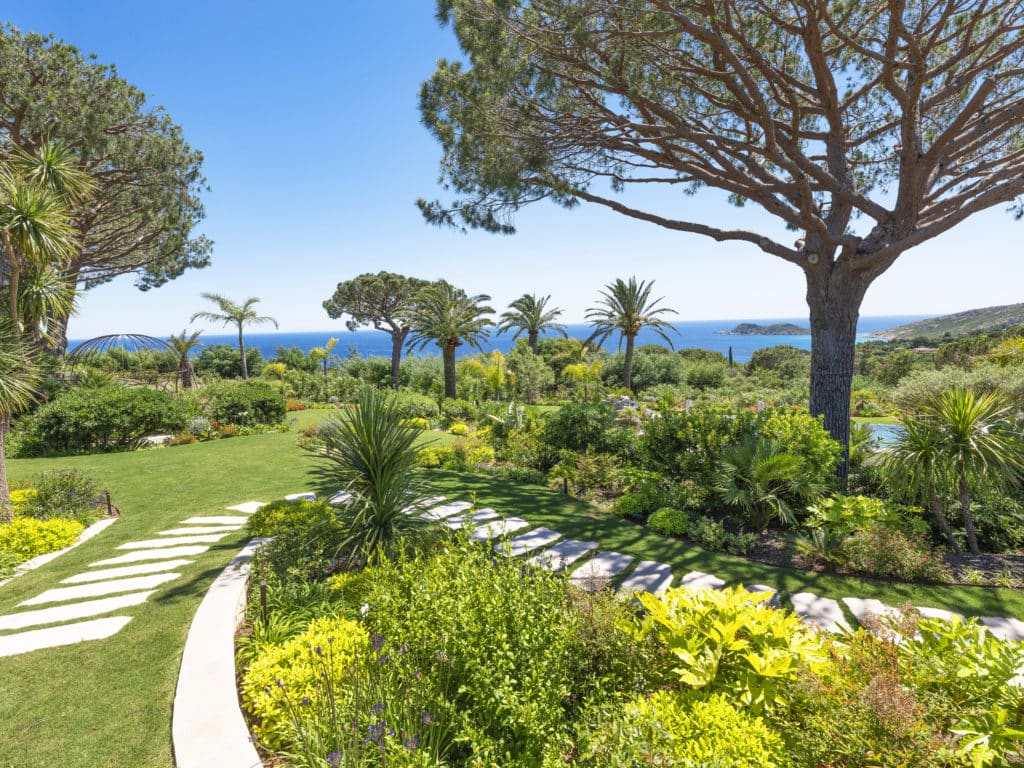
Imagine yourself sitting in your garden, lulled by the scent of lavender, as your eyes rest on the azure horizon. The Mediterranean coast offers a unique setting, but it is landscaping that brings out the true magic of the view. A well-designed garden does more than beautify: it guides the eye, creates perspectives, and enters into a dialogue with the sea. Local plants, noble materials, strategically placed seating… each choice shapes a true stage where nature and design meet to offer a living painting. So, how can you enhance the view from your panoramic garden?
The garden as a showcase for the sea view
To elevate the view of the sea, let’s begin by playing with orientation and topography.
Directing and framing perspectives toward the horizon
A seaside garden doesn’t just add plants: it sets the horizon on stage! As a true guiding thread, the view is appreciated like a natural fresco. With the help of structural vegetation, the environment becomes a living canvas: tall cypresses, majestic olive trees, and low flowerbeds (or even a few topiary-shaped shrubs) that highlight the waterline without ever obstructing it. Then architectural elements come into play, such as a delicately flowered arch, a louvered pergola, or a seat-height stone wall. Each of these elements slices the landscape and enhances the perspective.
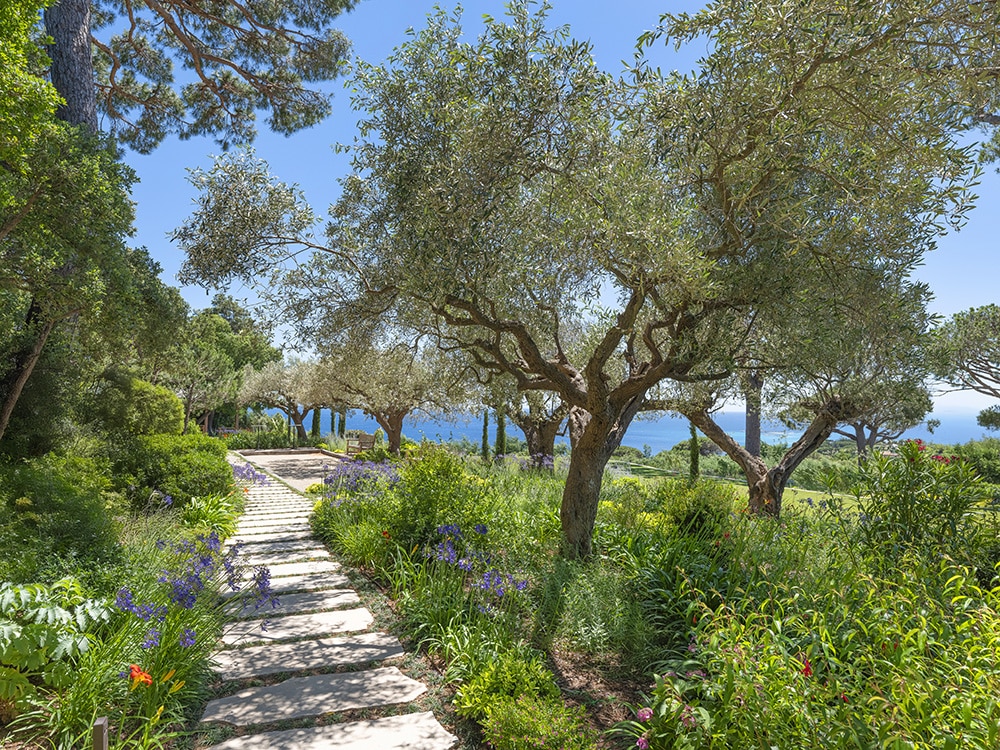
Paths structure the garden’s discovery while directing the gaze toward the sea. A pathway perfectly aligned with the horizon invites movement forward; a staircase leading to a belvedere creates surprise, while an infinity pool extends the view by reflecting the sky. Every layout subtly guides the step, and each turn unveils a new perspective. The garden is no longer just a backdrop: it becomes a living frame that reveals the view, highlights the site’s uniqueness, and transforms every moment facing the sea into a one-of-a-kind experience.
Playing with topography and space composition
Relief is a powerful tool for revealing the many facets of the marine landscape. With panoramic terraces or stepped garden levels, the space unfolds in tiers, each offering a different perspective: a bird’s-eye view from the upper level, a frontal frame from the main living platform, or a side glimpse from a more intimate corner—showcasing the full potential of designing a sloped garden. Changes in elevation structure both usage and visual experience: here, an outdoor lounge to admire the open sea; there, an extended step that becomes a seat facing the horizon. By playing with plant heights (low in the foreground, taller in the background), depth is created without compromising openness. In this way, the garden doesn’t compete with the sea—it reveals it, magnifies it, and makes it the true protagonist of the space. When the topography becomes more pronounced, this tiered design also turns a technical constraint into a real landscape asset, structuring the terrain with both method and elegance.
Aesthetic harmony with the Mediterranean environment
To create a balanced environment, it is important to work with color palettes as well as various materials.
Focusing on local plants and colors
To create a vibrant garden overlooking the Mediterranean coast, it is essential to choose vegetation that is well-suited to the environment. Regional species such as olive trees, carob trees, cypresses, or holm oaks naturally adapt to the climate and withstand sea winds—an essential factor when it comes to protecting a garden from wind and sea salt.
Alongside them, aromatic plants like rosemary, sage, or thyme release their fragrances and enrich the sensory experience. For a splash of color, fuchsia bougainvillea, purple lavender, or white and blue agapanthus add brightness and energy.
This palette does more than decorate—it interacts with the sea. The silvery green of olive trees echoes the water’s reflections, vibrant blooms highlight sunsets, and evergreen foliage ensures a structured landscape all year round. Each plant enhances the Mediterranean garden by accentuating the view without ever distracting from it.
Incorporating materials in harmony with the coastline
If plants define the soul of a garden, materials are its foundation. Along the Mediterranean, favoring simple, mineral textures helps anchor the project in its surroundings. Travertine, slate, or sandstone evoke the strength of the cliffs, while dry-stone walls—typical of Provence—create restanques that structure the terrain and multiply vantage points.
Wood brings warmth and authenticity. Teak or ipe planks, resistant to sea spray, cover terraces and pergolas, evoking seaside docks. Even pebbles or border stones echo the nearby beaches and blend seamlessly into the design. Chosen for their authenticity and durability, these materials become a discreet extension of the coastline. The goal remains the same: to provide an aesthetic setting that enhances the view without ever overpowering it.
Staging the visual experience
The garden as a stage: emphasize contrasts and depth while respecting privileged viewpoints.
The play of contrasts and depth
A panoramic garden must leverage perspective to reinforce the sense of openness toward the sea. One of the most effective techniques is to work with contrasts: dense, textured vegetation in the foreground, followed by a deliberately minimalist background. Thick clusters of grasses, agapanthus, or pittosporum can form a vegetal barrier that guides the eye—then fades away to reveal the vastness of the horizon. This layering of depth transforms the view into a living painting, where each plant stratum helps to showcase the blue line of the sea.
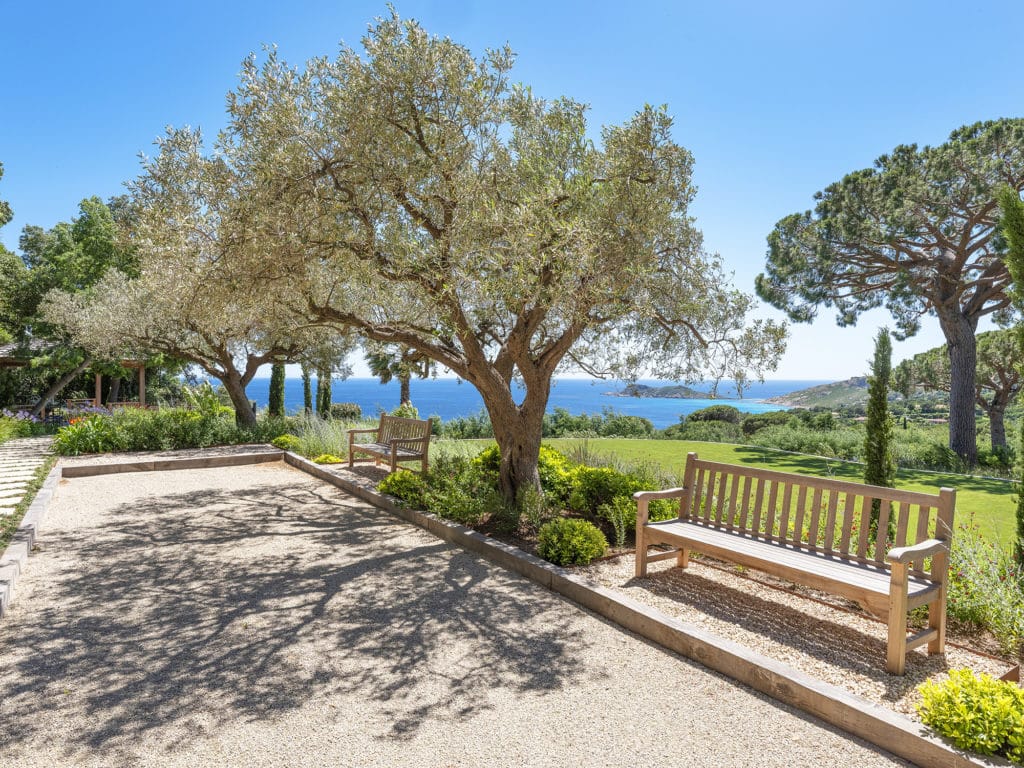
Variations in volume also contribute to this visual dynamic. Combining low-growing plants with tall, slender shrubs creates a natural rhythm that leads the eye. These sculpted perspectives create an impression of grandeur, as if the garden and the sea formed a unified scene.
Privileged viewpoints
A panorama holds value only if it can be comfortably admired. In a garden oriented toward the sea, it is therefore essential to create strategic resting spots. Wooden benches in the shade of an olive tree, an outdoor lounge set on a terrace, or a belvedere overlooking the view—each seating area should be designed to offer the best viewing angle. A Mediterranean terrace conceived as a place of contemplation becomes a true anchor point, where one settles in to face the horizon, surrounded by shade, light, and natural materials.
These resting areas become invitations to pause, where one enjoys the landscape in a peaceful atmosphere.
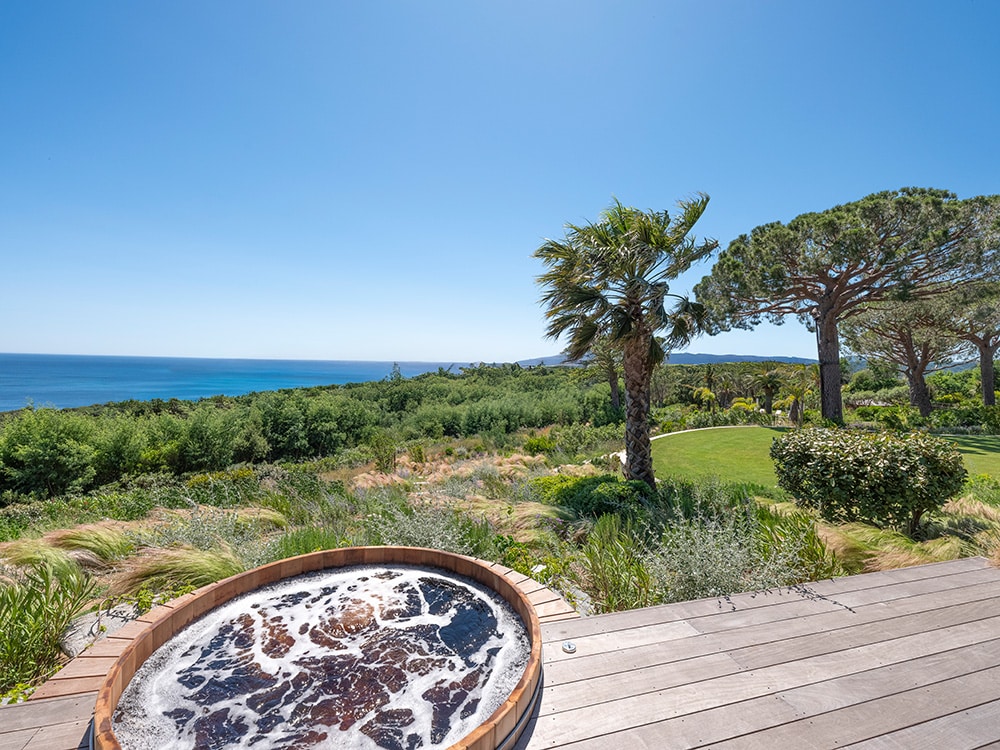
Staging also lies in the placement of these spots. A secluded bench at a height encourages meditation, while a lounge near a pond or pool enhances conviviality. But the ultimate touch of refinement is the cascading infinity pool: a liquid mirror that extends the sea, erasing the boundary between garden and horizon. Both a place of relaxation and a work of landscape art, it transforms every gaze into a sensory experience, where water and sky blend into one.
In certain exceptional layouts, this scenographic approach is further enhanced by the integration of artistic or sculptural elements into the garden design, extending the perspective and reinforcing the emotional dimension of the landscape.
Thus, the viewpoints, whether intimate or spectacular, turn the garden into a true theatre of the view, where the sea remains the undisputed muse.
See also: The best landscape designers on the French Riviera: how to choose wisely?
Enhancing a sea view requires skill and attention to detail. With Adonis Paysages, transform your outdoor space into a true panoramic gem. Together, let’s bring to life a garden that tells your story and showcases the sea as the central jewel of your living environment.